
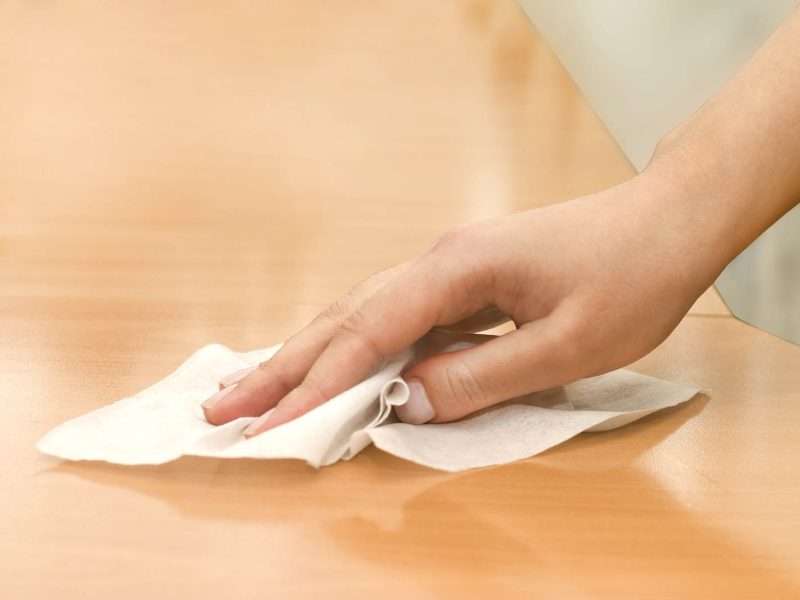
Wipes have become an indispensable cleaning product in our daily lives. Whether they are used for baby care, personal hygiene or household cleaning, the quality and performance of wipes are crucial. And the weave, material and pattern of wipes are key factors in determining their quality and suitability.
Today, let’s delve into the details of these aspects. You will learn from this article Huihao’s professional classification of wet wipes fabrics and related knowledge of weaving technology, as well as their advantages and disadvantages. You can use this article as one of the reference articles for your own wet wipes fabric selection.
Wet Wipes Weaving
half-cross weave
half-cross weave is characterised by the interweaving points of the warp and weft threads being arranged in a slanting pattern at a certain angle, resulting in a unique twill pattern. This style is used in wet wipe cloth producing usually.
Advantages:
- More abrasion-resistant and durable, able to withstand more pulling and friction.
- Has better breath ability and absorbency to absorb liquids faster.
Disadvantage:
- The production process is relatively complex and costly, resulting in high product prices.
Twill weave wipes are commonly used in situations that require greater durability and absorbency, such as kitchen cleaning and car interior cleaning.
Straight weave
Straight lay weaving is a kind of weaving method with the least number of interweaving points, and the warp or weft threads continuously float longer on the wet wipe fabric surface, thus making the fabric surface smooth, soft and with good gloss.
Advantages:
- The surface is very smooth and soft to the touch
- Has better stretch and elasticity for more comfortable use.
Disadvantage:
- Due to fewer interwoven points, the fabric has a relatively loose structure and is less durable and strong.
Wet wipes with a straight weave are usually used in personal care areas where softness and comfort are important, such as facial cleansing and make-up removal.
The material of wet wipes
- Non-woven Fabric
Non-woven fabric is one of the most commonly used materials in wipes and is usually made of viscose and polyester.
Advantages:
- Good breath ability and softness
- Lower cost and easy to mass produce.
- It has some strength and durability.
Disadvantages:
- Relatively poor environmental performance, not easy to degrade.
Wipes made of non-woven material are widely used in various daily cleaning scenarios.
Cotton
Cotton wipes are made from natural cotton.
Advantages:
- Natural and environmentally friendly, gentle and non-irritating to the skin, especially suitable for babies and people with sensitive skin.
- Highly absorbent, able to quickly absorb large amounts of liquid.
- It has good moisturising properties, making the skin less prone to dryness.
Disadvantages:
- Higher costs result in relatively higher product prices.
- It is prone to bacteria and mould and needs to be stored properly and used in a timely manner.
Cotton wipes are commonly used for high-end baby care, facial cleansing and other occasions that require high quality materials.
Bamboo Fibre
Bamboo fibre is a natural fibre derived from bamboo.
Advantages:
- It has good antimicrobial properties and can effectively inhibit the growth of bacteria.
- Breathable to keep skin dry.
- Environmentally sustainable, bamboo is fast growing and resourceful.
Disadvantages:
- Softness and absorbency may not be as good as cotton.
- The production process is relatively complex and costly.
Wipes made of bamboo fibre are suitable for consumers who are concerned about environmental protection and anti-bacterial features.
III. Patterns of wipes
Pearl Pattern
Embossing is the formation of an uneven texture on the surface of wipes by mechanical pressure.
Advantages:
- Increases the friction of the wipes for improved cleaning.
- It makes the wipes thicker and more textured.
Embossed wipes are commonly found in kitchen wipes, industrial cleaning wipes and other products that require strong cleaning power.
Plain Pattern
Plain patterned wipes have a flat surface without any decoration or texture.
Advantages:
- The original softness and absorbency of the wipes is maintained, providing the purest experience of use.
- The production process is simple and low cost.
All the following different fabric patterns are derived from previous production practices and Huihao’s production process. For specific applications of private label wet wipe, please communicate with our sales team.


Recent Comments